Welcome back. While stating to write about entomophagy in general, I thought I would be covering it in one single post. But to my utter surprise, its a whole new world out there exceeding my expectations about human entomophagy. As a non-practicing veterinarian, I’m totally out of focus about the facts that insects are being used as protein substitutes in animal feed too. Limiting only to human entomophagy, what’s the scene in our own backyard, err country…?
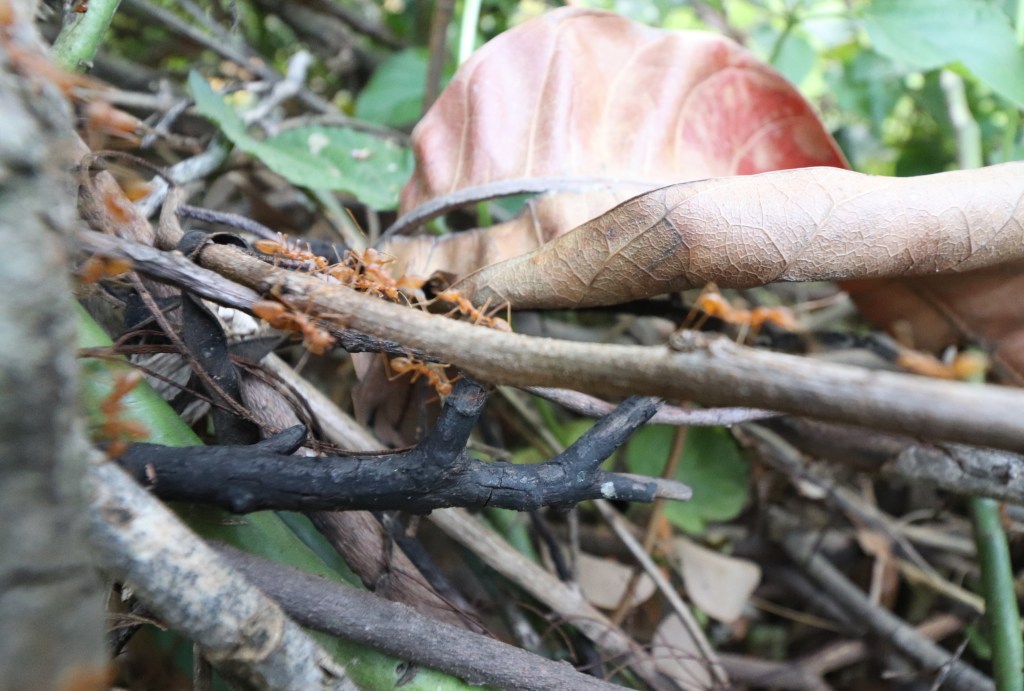
A study by FDA – USA says ,on an average a human being in the US consumes somewhere around 2 pounds ( just above 900 grams) of insects unknowingly , through some vegetables like cauliflower and broccoli and other leafy vegetables. (Source: Why Aren’t We Eating More Insects? , Ligaya Mishan, 2018). This may hold true in India too. Moreover we eat more leafy vegetables than the countries in the western hemisphere.
The moment we think about insect eating in this country, the only thing comes in our mind is the red ant chutney eaten in some parts of the districts in Bastar Division of Chhattisgarh. Thanks to internal insurgency, it came into limelight through the visiting journalists who visit this part of the state only to cover the stories related to insurgency….. not entomophagy.
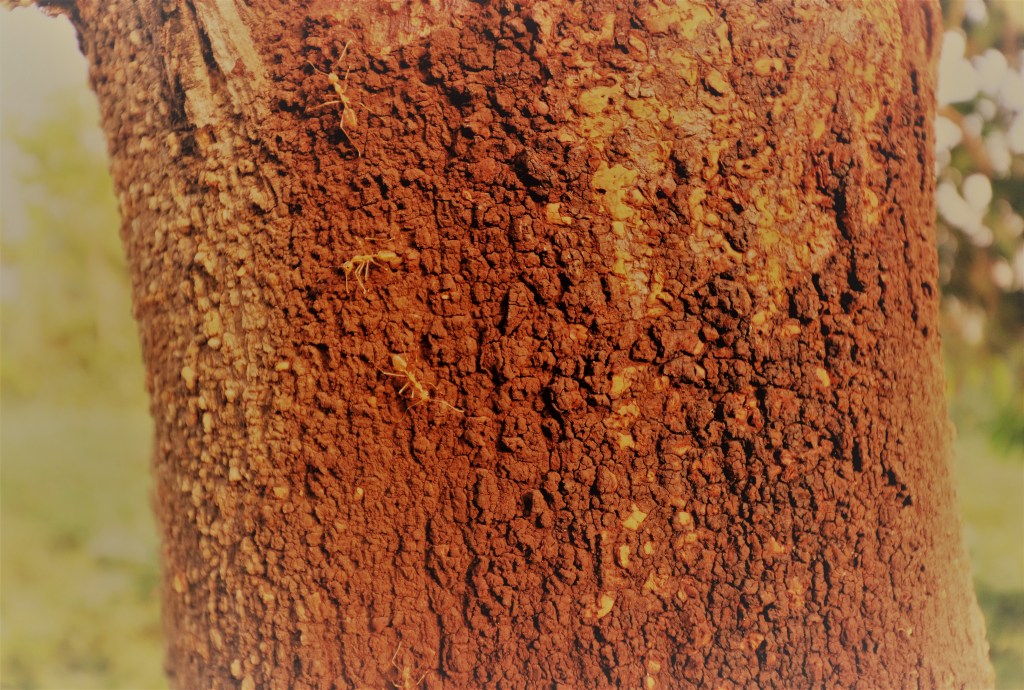
Contrary to the common belief, about 300 species of insects are eaten in India, across 10 states as per available data. (Source:Will insects become an integral part of our diet again? Down to Earth)
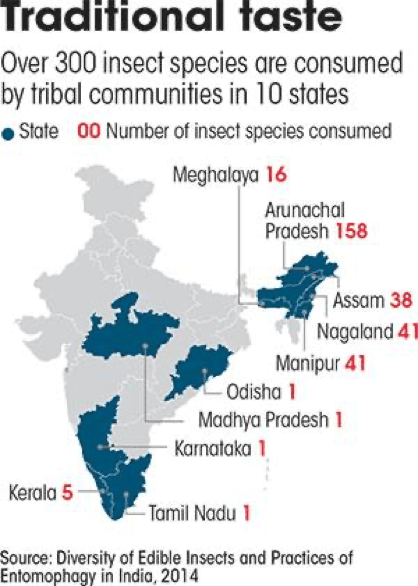
(Image Courtesy: Will insects become an integral part of our diet again? Down to Earth)
The eggs of red ants which taste similar to egg yolk are consumed by indigenous people of North East along with the crunchy Leta or the larva of silkworms. The Bodos of Assam considers this a delicacy, and it is a staple in their diet. Cinnamon bugs are fried in oil and consumed in Assam, Manipur, Mizoram and Tripura. They also consume caterpillars, termites, grasshoppers, crickets and beetles. (Source:Eating insects is a healthy choice. But are you ready?, The Indian Express)
Termites are eaten by rural people, especially the tribes in Karnataka. Muria tribes in Madhya Pradesh consume of insect larvae known as chin kara as well as certain species of ants recorded in connection with various other food items. In Tamilnadu, and in Karnataka, the winged termites, commonly called as Eesal are consumed as food . In Odisha where termites are eaten alone or together with rice .While in Kerela at least five species of insects (bees, ant and termite) were reported to be consumed. Insects as an item of food for Negrito tribes of the Indian Andaman Islands were also reported.
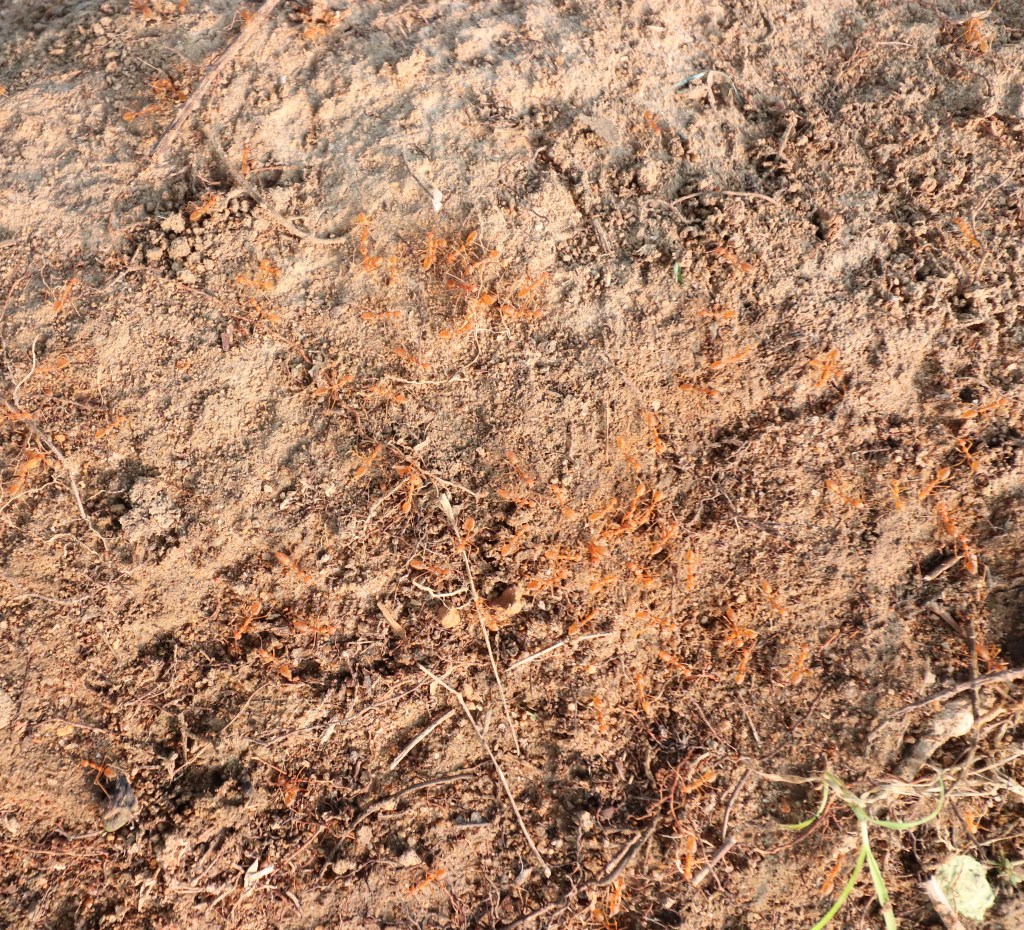
The termites are fried as it is or fried along with groundnut by adding Bengal gram (pulse), puffed rice and salt. The fried pulses, spices and salt enhance the taste and are consumed as a delicacy in rural villages of south India.
“The ethnic and rural people rely on the conventional local wisdom to quickly find which insects are edible as well as where to find and how to catch them. These traditional, highly developed skills have been passed down from generation to generation. This indigenous knowledge has, however, gradually declined with changing socio- economic conditions and dietary habits.” ( Diversity of Edible Insects and Practices of Entomophagy in India: An Overview: Jharna Chakravorty. – Journal of Biodiversity , Bioprospecting and Development)
Though insects are most abundant in a tropical country like India, and a large percentage of the population living in rural or semi urban areas but the diversity of insects taken as food is much lower.
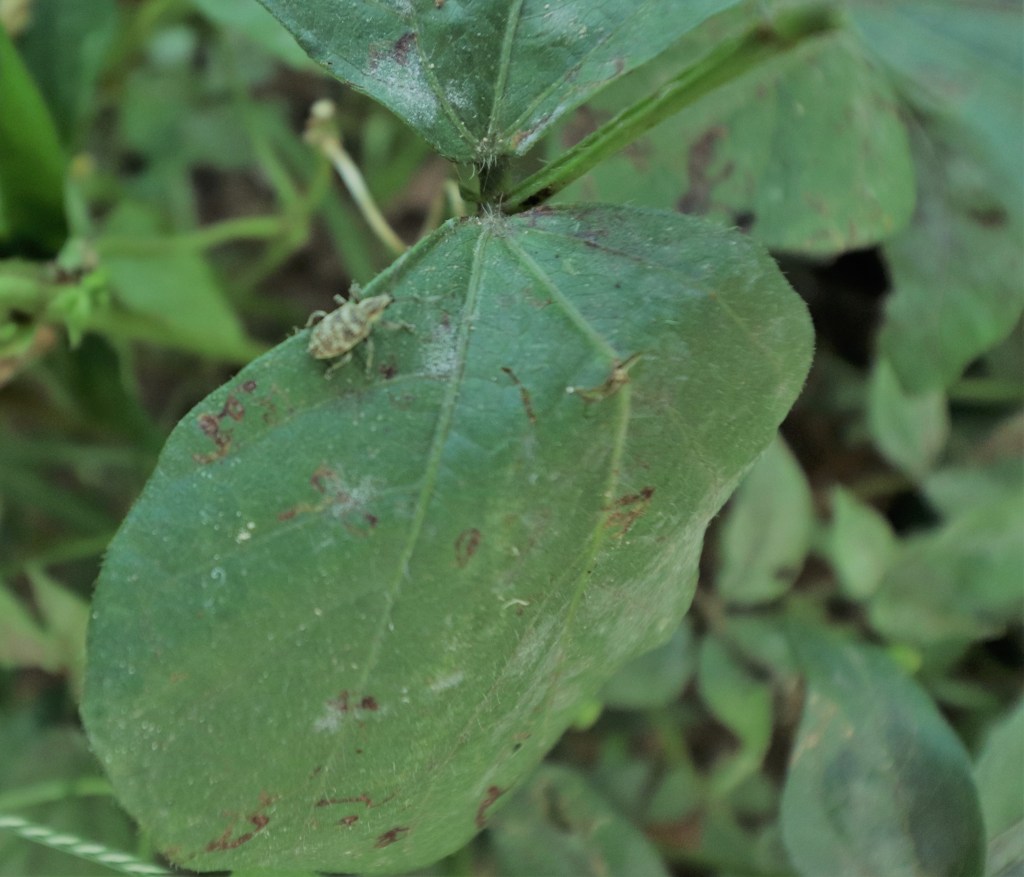
While insects are considered as a alternative food option for its better quality of nutrients, less carbon footprint and sustainability. Truly enough, the growing market demand and increase in sale volume indicate the insects are for sure, the future foods.. if not super foods. From USD 55 Million presently, it is supposed to grow in to USD 1 Billion by 2022. Encouraging enough.
Apart from insects, one more food ingredient which is slowly slipping out of our eating tradition is…. Wild plants.
Yes. You read it right. Wild plants…!!! Euell Gibbons, who is an authority in wild food, famously quoted ” Ever eat a pine tree..? many parts are edible.” True That. After the advancement in technology and transportation, we are easily accessible to mainstream vegetables. so, slowly we are losing knowledge and tradition of eating wild plants and wild products as main staple of food. Lets explore about wild foods in my next post.
 Good Food....Good Mood.